
People ask me what do I eat in a day. Usually with a slightly skeptical look, like they're expecting the answer to be celery and willpower!
It isn't. My actual day of eating looks like real food, real flavor, and zero deprivation. What it does have, every single time, is intention. Not about cutting calories. About making the calories I eat count for something.
That distinction — quality over quantity — is the entire philosophy behind how I eat, and how I teach my patients to eat.
THE CONCEPT THAT CHANGES EVERYTHING: NUTRIENT DENSITY
Here's the idea I come back to more than any other in my practice: a calorie is not just a calorie.
Nutrient density is the amount of beneficial nutrients you get for every calorie you eat — vitamins, minerals, fiber, protein, healthy fats. Two foods can have the exact same calorie count and deliver completely different outcomes for your body. A 250-calorie serving of almonds delivers protein, healthy fats, vitamin E, and magnesium. A 250-calorie donut delivers sugar and processed flour with little else.
Same number. Completely different experience for your body.
This is why a sweet danish for breakfast leaves you hungry again by 10am, irritable, and reaching for something else by 11. It gave you calories. It didn't give your body the materials it actually needed — protein to stabilize your blood sugar, fiber to slow digestion, micronutrients to fuel the hundreds of processes happening in your cells right now. Diets high in ultra-processed foods consistently lead to overeating, while nutrient-dense foods — naturally higher in fiber, protein, and healthy fats — are filling, satiating, and satisfying in a way processed food simply isn't built to be.
There's real science behind why. Protein and fiber both extend how long you feel full: protein stimulates satiety hormones and has a higher thermic effect, meaning your body burns more energy just digesting it, while fiber adds bulk and slows digestion, prolonging fullness. Foods with high water content — like fruits and vegetables — increase stomach volume without adding meaningful calories. In one foundational satiety study, boiled potatoes scored as one of the most filling foods tested, far above bakery products and snack foods with similar calorie counts. The takeaway: what you eat matters just as much as how much, often more.
So here's what an actual day looks like for me — built entirely around that idea.
BREAKFAST: GREEK YOGURT BOWL
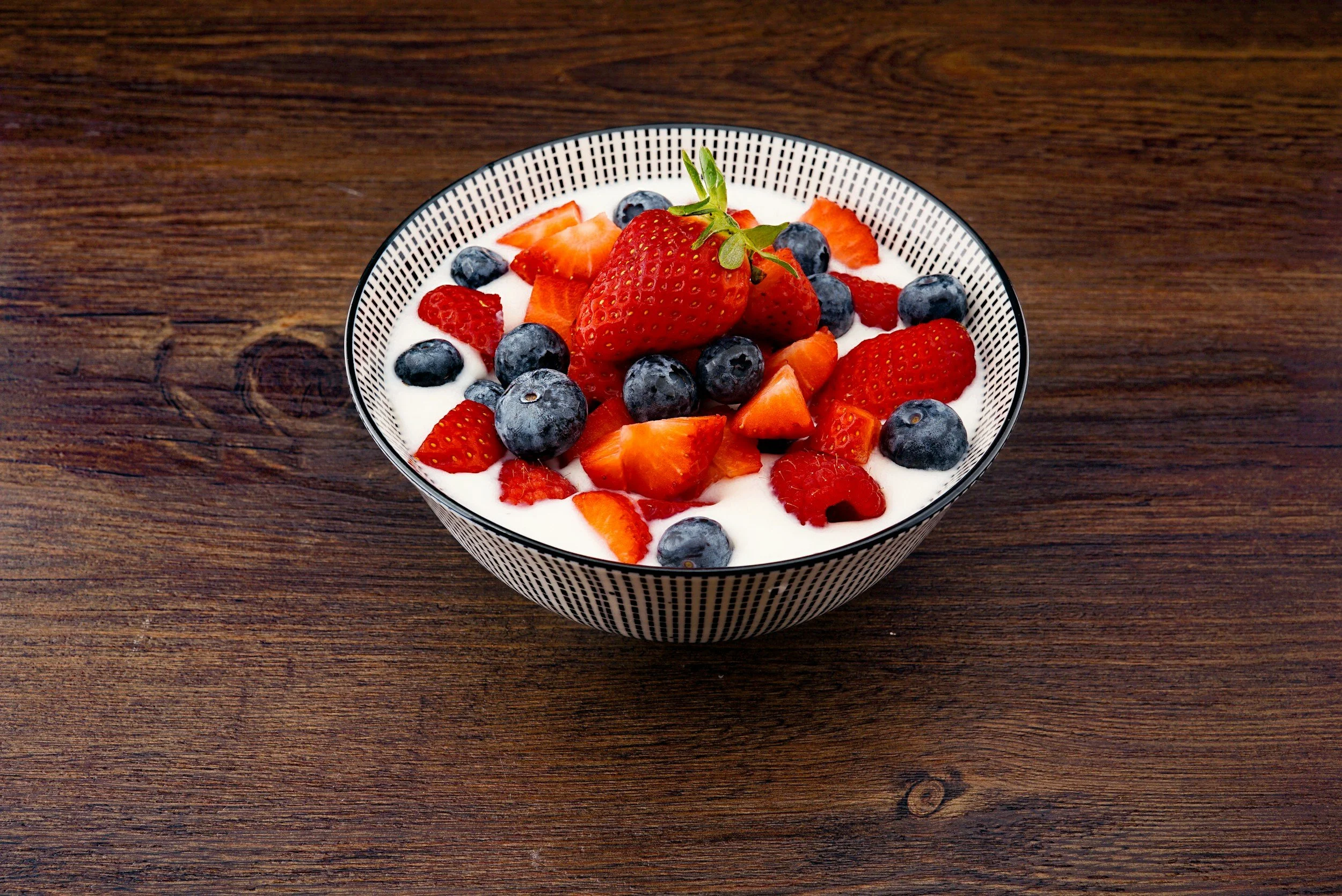
Plain Greek yogurt, a handful of fresh berries, half a banana sliced in, a drizzle of honey, and crushed walnuts on top.
This single bowl hits protein, fiber, healthy fats, and antioxidants before 8am. The protein in Greek yogurt keeps me full for hours. The berries add fiber and polyphenols. The walnuts bring omega-3s and a satisfying crunch. The honey is there because food should taste good — a small amount of natural sweetness doesn't undo any of the nutritional value sitting underneath it.
Compare that to a pastry with roughly the same calories: you get a sugar spike, a crash an hour later, and nothing your body can actually use to keep running.
LUNCH: SALAD KIT, LEVELED UP
I'll be honest — I use a store-bought salad kit as my base most days. There's no shame in starting with something convenient. What matters is what I add: half the dressing packet (most are loaded with more sugar and sodium than you'd guess), a generous handful of roasted vegetables I've prepped ahead of time, and a protein — grilled chicken, baked salmon, or a mix of nuts and beans if I'm eating plant-based that day.
This turns a fine salad into a complete, satiating meal. The protein and fiber combination is doing real metabolic work — slowing digestion, stabilizing blood sugar, and keeping me full well past 3pm without a crash.
AFTERNOON SNACK: SOMETHING WHOLE
A piece of fruit, or raw vegetables with a simple dip like hummus or tzatziki. Nothing complicated. The fiber and water content in fresh produce make this satisfying in a way that a granola bar or chips never quite manage to be, even at a similar calorie count.
DINNER: BUILT AROUND PROTEIN AND COLOR
Most nights it's one of two things: turkey meatballs with a big side of roasted or sautéed vegetables and a brown rice and quinoa blend, or falafel with the same vegetable and grain combination.
Both follow the same structure — lean protein, fiber-rich vegetables, a complex carbohydrate — because that structure is what actually works, not because I'm following a rule for its own sake. It's the plate method in practice: protein for satiety and muscle maintenance, vegetables for fiber and micronutrients, a whole grain for sustained energy.
MORE QUICK, ONE-PERSON MEALS I LEAN ON
Cooking for one shouldn't mean cooking less well. These are meals I make on repeat because they're fast, require minimal cleanup, and still deliver on nutrient density:
Sheet pan salmon and vegetables. Salmon fillet, broccoli, and bell peppers tossed in olive oil, roasted together on one pan at 400°F for 15 minutes. One pan, one cleanup, dinner done.
Egg and veggie scramble. Two eggs scrambled with whatever vegetables are about to go bad in your fridge — spinach, mushrooms, tomatoes, peppers. Add a slice of whole grain toast. Ready in under ten minutes.
Tuna and white bean salad. Canned tuna, a can of white beans (rinsed), chopped celery, a spoon of olive oil and lemon juice, salt and pepper. No cooking required. Eat over greens or with whole grain crackers.
Lentil soup, doctored. Start with a store-bought lentil or vegetable soup, then add a handful of spinach and a sprinkle of parmesan at the end. Five minutes, and you've added fiber, micronutrients, and protein to something already convenient.
Greek yogurt "ranch" chicken bowl. Shredded rotisserie chicken, plain Greek yogurt mixed with garlic powder, lemon, and herbs as a dressing, over a bed of greens with cucumber and tomato. Tastes indulgent. Isn't.
Stir-fry with whatever you have. A scrambled egg or pre-cooked protein, a bag of frozen stir-fry vegetables, a splash of soy sauce and sesame oil, served over quick-cooking rice. Ten minutes, almost no decisions required.
THE BIGGER POINT
None of this is about restriction, and none of it requires hours in the kitchen. It's about making sure that most of what you eat is actually working for you — fueling your energy, supporting your metabolism, keeping you satisfied — rather than just filling space.
A nutrient-dense way of eating tends to naturally displace the ultra-processed, calorie-dense foods that leave you wanting more anyway. You're not forcing yourself to eat less. You're simply choosing food that does more, so you need less of it to feel satisfied. That's not a diet. That's just how I eat — and it's how I encourage every patient who walks into my practice to think about food too.
The danish isn't the enemy. It's just not doing the same job as the things you're putting on your plate to actually feel good.
Want help building a week of meals like this around your own life and schedule? That's exactly what I do. Book a consultation here: https://www.valentinenutrition.net/contactus
References: jmcallisterrd.com, Smart Eating in 2025: Why Nutrient Density Is Replacing Calorie Counting (2025). Omada Health, Calories or Nutrients? What Really Counts for Cardiometabolic Health (2025). GlobalRPH, The Satiety Index: Understanding Food's Fullness Factor (2025). Pritikin Longevity Center, The Impact of Calorie Density on Weight Management (2025), citing Rolls et al., American Journal of Clinical Nutrition.
