
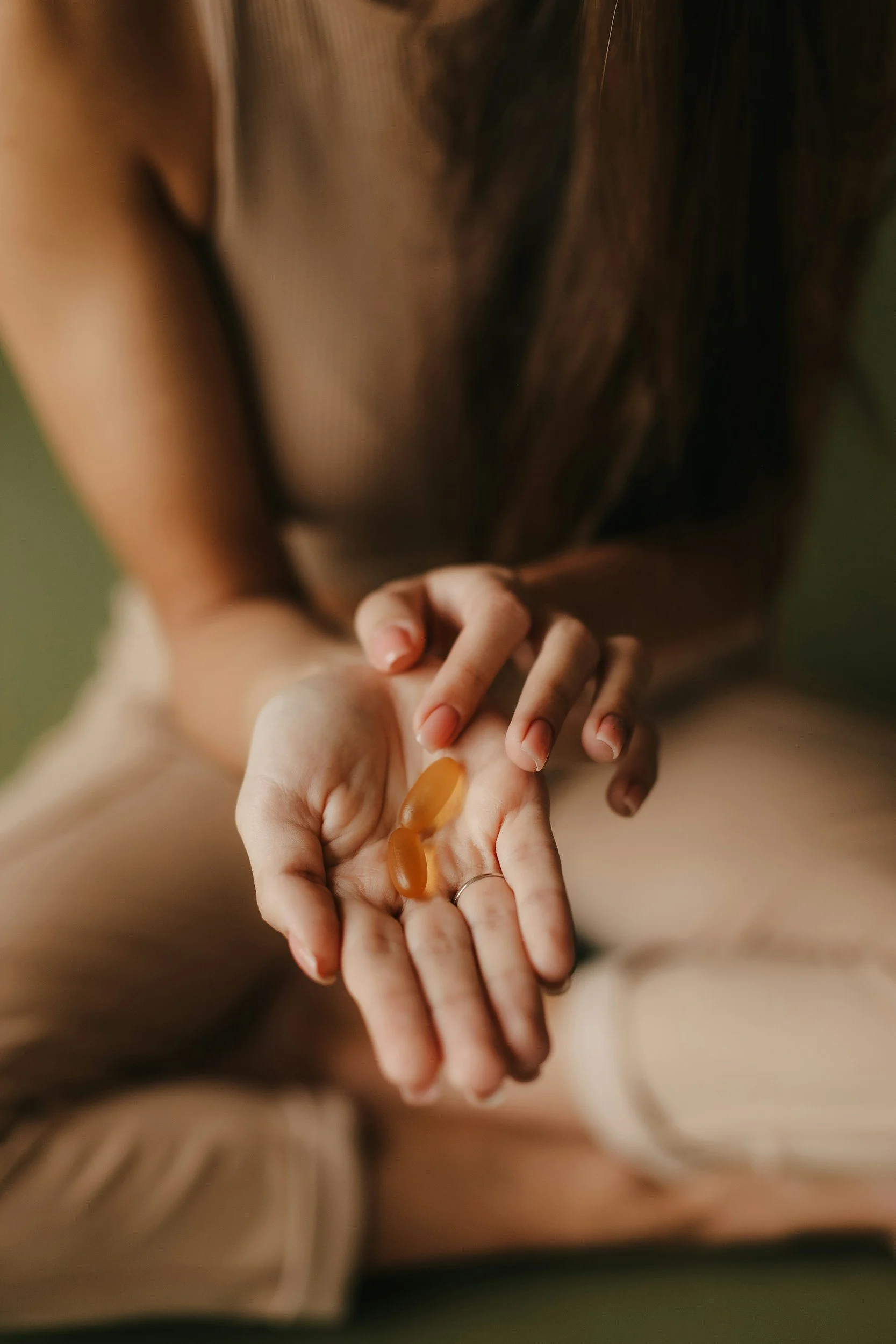
Amara came in with a bag of TikTok supplements. Collagen. A metabolism booster. A greens powder.
She was on semaglutide. Exhausted. Nails breaking. Hair in her brush.
What she needed was a short, purposeful list built specifically for GLP-1 users.
Here it is.
FIRST — WHAT THE RESEARCH ACTUALLY SAYS
A 2026 review of 480,825 adults on GLP-1 medications found one thing clearly: micronutrient deficiencies are a common consequence, not a rare side effect. One in eight patients was newly diagnosed with a deficiency within six months.
And here's what makes GLP-1s different from just eating less: semaglutide has been shown to directly reduce intestinal iron absorption. That's a physiological mechanism — not a food intake problem. The medication itself changes how certain nutrients are absorbed.
That changes the supplement conversation entirely.
VITAMIN D3 + K2
The most common deficiency in GLP-1 users. Found in 7.5% of patients within six months in the largest study to date.
Take D3 — not D2 — paired with K2 (MK-7 form). K2 sends calcium to your bones, not your arteries.
Get your levels tested first. 2,000 to 5,000 IU daily is typical. NSF Certified or USP Verified softgel only. No gummies — heat destroys fat-soluble vitamins during manufacturing.
From food: salmon, mackerel, sardines, egg yolks. Rarely enough on its own, especially in New York.
VITAMIN B12 — AND WHY DROPS MATTER HERE
B12 is absorbed in your stomach through a protein called intrinsic factor. GLP-1 medications slow gastric emptying — which disrupts that process.
A capsule has to survive a slowed digestive system. Sublingual drops dissolve under your tongue and absorb directly into the bloodstream. On a GLP-1, drops are the smarter choice.
Form: methylcobalamin only. The active form your body uses immediately. Cyanocobalamin requires conversion — a step many people can't do efficiently.
From food: beef, salmon, sardines, eggs, Greek yogurt. If these are consistent, you may be fine. If appetite is low and they're not making it to your plate, get the drops.
MAGNESIUM GLYCINATE
A 2025 case report documented critically low magnesium in a semaglutide user — severe enough to affect calcium levels simultaneously.
Magnesium governs blood sugar regulation, sleep, muscle function, and mood. Take it at night in glycinate form — sleep improves as a bonus.
Avoid magnesium oxide. It's poorly absorbed and essentially a laxative.
From food: spinach, pumpkin seeds, almonds, avocado, dark chocolate, legumes. Another reason the Mediterranean way of eating works.
IRON — TEST BEFORE YOU SUPPLEMENT
This one has a mechanism unique to GLP-1s. A 2025 prospective study of 51 adults showed semaglutide markedly reduced intestinal iron absorption after just 10 weeks. A separate cohort found GLP-1 users had 26-30% lower ferritin than people on other diabetes medications.
This isn't about eating less. The medication appears to affect absorption directly.
Don't supplement without testing. Too much iron is as harmful as too little. Ask for ferritin — not just hemoglobin. Below 30 ng/mL in women is where fatigue and hair loss become clinically significant, even when hemoglobin looks normal.
If your labs show a need: iron bisglycinate. Gentler on the stomach, better absorbed than ferrous sulfate.
From food: red meat, oysters, sardines, lentils, chickpeas, spinach. Always pair plant-based iron with vitamin C.
CREATINE — THE ONE NOBODY IS RECOMMENDING YET
Up to 40% of weight lost on semaglutide can come from lean mass, not fat.
That's the number that matters. Muscle loss slows metabolism, worsens insulin sensitivity, and makes maintaining results significantly harder — on the medication and after.
A 2026 review of 60+ peer-reviewed studies specifically evaluated creatine monohydrate as an adjunct to GLP-1 therapy. It found creatine activates muscle-preserving pathways independently of insulin and consistently protects lean mass during weight loss.
A 2025 case series of three GLP-1 patients who combined resistance training, adequate protein, and creatine: one lost only 8.7% of total weight as lean tissue. Two actually increased lean soft tissue while losing 26-33% of their body weight.
What to take: creatine monohydrate. 3 to 5 grams daily. No loading phase. No taste. Mix it into your smoothie and move on. You may see a small, temporary scale increase — that's water moving into muscle cells. That's it working.
HAIR AND NAILS
Over 1,000 FDA adverse event reports link semaglutide and tirzepatide to hair loss. The cause is telogen effluvium — temporary, reversible shedding triggered by rapid weight loss and metabolic stress.
Three nutrients directly connected to it:
Biotin supports keratin — the structural protein in hair and nails. 2,500 to 5,000 mcg daily in capsule form.
Zinc is directly linked to telogen effluvium in GLP-1 users. Address this through food first — oysters, pumpkin seeds, beef, chickpeas. Don't supplement long-term without supervision. Extended zinc use depletes copper, causing its own serious problems.
Iron — already covered above. If your hair is shedding, ferritin is the first lab to request.
Shedding typically starts one to three months after beginning or increasing the dose. It resolves as weight loss stabilizes. The right nutrients speed that return.
PROBIOTICS
GLP-1s slow digestion and alter the gut environment. A quality probiotic helps your microbiome adapt — with benefits that reach immunity, mood, inflammation, and metabolism.
Look for Lactobacillus acidophilus and Bifidobacterium longum specifically. Minimum 10 billion CFUs. Third-party tested.
From food: Greek yogurt with live cultures, kefir, sauerkraut, kimchi, miso. Pair with prebiotic foods — garlic, onions, oats, asparagus. Together, they do the real work.
OMEGA-3S — FOOD FIRST
Omega-3s fight inflammation, protect muscle during weight loss, and support the cardiovascular benefits your GLP-1 is already building.
Food first: salmon two to three times a week, sardines, mackerel, walnuts, chia seeds. If you're eating the Mediterranean way, you may not need a capsule.
If you supplement: 1,000mg combined EPA and DHA minimum. Triglyceride form (re-esterified TG on the label). Third-party tested. Should smell clean.
ONE RULE BEFORE YOU BUY ANYTHING
Look for USP Verified, NSF Certified, or ConsumerLab Approved. These seals mean an independent third party confirmed the product contains what it claims, in the dose listed, without contaminants.
And check the active form: methylcobalamin, cholecalciferol, magnesium glycinate, iron bisglycinate. "Vitamin B12" or "Magnesium" without the specific form is often the cheaper, less absorbable version.
THE BIGGER PICTURE — AND WHY IT MATTERS
Here's what I want every GLP-1 patient to understand.
The medication is a tool. A powerful one. But a tool only works as well as the hands using it.
When you take a GLP-1 and do nothing else, you lose weight. Some fat, some muscle, some water. Your labs may improve. Your doctor may be pleased.
But when you take a GLP-1 and you eat with intention — protein at every meal, fiber, olive oil, real food — you preserve muscle, support your gut, and build the metabolic foundation that lasts.
When you move your body — resistance training two to three times a week — you protect the lean mass the medication can't protect on its own. The research is unambiguous on this.
When you supplement strategically — D3, B12 drops, magnesium, creatine, the things your body specifically needs while on this medication — you fill the gaps the prescription never addressed.
This is the difference between losing weight and transforming your health.
A GLP-1 changes your appetite. Nutrition changes your biology. Movement changes your body composition. Supplements fill what both can't cover alone.
None of these work in isolation. All of them together? That's the outcome that actually lasts — on the medication, stepping off it, and years from now.
The medication opens the door. Everything else determines what you build once you walk through it.
Within three months her energy was back, her nails stopped breaking, the shedding slowed, and the fog lifted.
The medication was doing its job. These nutrients were doing theirs. The Mediterranean plate we built together was doing both.
That's the full picture. And it's a good one.
Want a supplement review based on your actual labs and your GLP-1 medication? That's exactly what I do. Book a consultation: https://www.valentinenutrition.net/contactus
References: Urbina J. et al. Clinical Obesity (2026). Butsch W. et al. Obesity Pillars (2025). Melis P. et al. Diabetes, Obesity and Metabolism (2025). Davis T.M.E. American Journal of Case Reports (2025). Branyiczky et al. International Journal of Dermatology (2025). Krupa et al. Quality in Sport (April 2026). PMC Case Series: lean soft tissue preservation during GLP-1 therapy (2025). NSF International, USP, ConsumerLab (2025-2026).
